Showing posts with label Saint of the Day. Show all posts

Tuesday, January 24, 2023

Feast of the conversion of St. Paul

 Feast of the conversion of St. Paul


My turning point


"I asked, ‘What shall I do, sir?"

 (Acts 22:3-16)


Beloved, there is a significant question in responding to God's call, one that no longer seeks your plans, your dreams and aspiration, but God's. 

That question is,


 ‘Lord, what do you want me to do?.’ It was Paul's turning point, St. Francis of Assisi's too, and yours it shall be if you let Him.


Good morning and happy feast

-Gerald Nwogueze, OFM Cap.

Thursday, January 19, 2023

Blessed Cyprian Michael Iwene Tansi, Priest and Monk (5 Lessons to Learn from Him)

Blessed Cyprian Michael Iwene Tansi, Priest and monk, Patron of Nigerian Priests (born in Aguleri, Anambra State, Nigeria in September 1903 died in Leicester, England, January 24, 1964) was an Igbo Nigerian ordained a Roman Catholic priest of the Archdiocese of Onitsha, Nigeria on December 19, 1937. He worked in the parishes of Nnewi, Dunukofia, Akpu/Ajalli and Aguleri.


Tansi did not only live a contemplative life, he also engaged in active ministry. As a pastor and Father, he did the normal day to day function of a shepherd, but with extraordinary love and dedication. 

We Nigerian parish priests or brothers and sisters engaged in pastoral works can emulate his love for his flocks, evangelize the youths, teach them faith and morals, counsel couples preparing for marriage, visit the poor, sick, be a good confessor and promote vocation to the Priesthood and religious life by our examplary life of charming purity, simplicity and prayer,  when necessary as St. Francis of Assisi would say, use words.

As we celebrate his feast day today, we ask for his intercession and guidance while we pray that his canonization process may be hastened for the greater glory of God. Amen. 

-Gerald Nwogueze, OFM Cap.

Sites consulted: 

Google, Blessed Iwene Tansi: The patron saint of Nigeria's democracy @20 www.thecable.ng 

Thursday, October 21, 2021

5 Important Lessons to Learn From St. John Paul II, Pope, a witness to hope


 St. John Paul II, A witness to hope

Introduction 

Coming to papacy after his his election, he addressed the world saying, "Be not afraid, open wide the doors for Christ." This speech reveals his great desire to build bridges and promote peace. He featured in a world full of tension, war, national and international crisis and other threats to peace.

Who is Pope John Paul II?

-Karol Jósef Wotjtyła was born in 1920 in Wadowice, Poland. 

-On October 16, 1978, he was elected Supreme Pontiff and took the name John Paul II. 

-His exceptional apostolic zeal, particularly for families, young people, and the sick, led him to make numerous pastoral visits throughout the world. 

-Among the many fruits which he has left as a heritage to the Church are above all his rich body of teachings, the promulgation of the Catechism of the Catholic Church, and of the Codes of Canon Law for the Latin Church and for the Eastern Churches.

- In Rome on April 2, 2005, the eve of the Second Sunday of Easter (or of Divine Mercy), he died peacefully in the Lord.

The Lagacy of Pope JP II as a Man of Peace

- A preacher and Witness of Peace

-Religious and National Freedom 

-The End of Communism in Poland

-The International Recognition of the Republic of Croatia

-Inter-Religious Dialogue

-Apology on behalf of the Catholic Chruch. Amongst others. 

<div class="ytiframe"><iframe allow="accelerometer; autoplay; clipboard-write; encrypted-media; gyroscope; picture-in-picture" allowfullscreen="" frameborder="0" height="auto" src="https://www.youtube-nocookie.com/embed/aAj2c1BGFEA?&autoplay=1&rel=0" title="YouTube video player" width="100%"></iframe></div>

Conclusion 

Blessed are the peace makers for they shall be called the sons of God (Matt 5:9). We have noted the points that actually proclaims him a son of God. No wonder the UN Secretary General Mr. Kofi Annan in 2005, praised him as "a tirelwss advocate of peace." The voice of the people which is the voice of God could be heard after his death, Santo subato! Sainthood Now!

Reference

Nwogueze, G. 2022. Pope John Paul II is a Man of Peace: A Discourse (Unpublished) 

Saint of the Day

Homily of Pope John Paul II for the Inauguration of his Pontificate www.vatican.va>document assessed 11th May, 2022.

Tuesday, September 28, 2021

Sts. MICHAEL, GABRIEL, and RAPHAEL, Archangels.


Angels—messengers from God—appear frequently in Scripture, but only MICHAEL, GABRIEL, and RAPHAEL are named.

Michael [“Who is like God?”] appears in Daniel’s vision as “the great prince” who defends Israel against its enemies; in the book of Revelation, he leads God’s armies to final victory over the forces of evil. Devotion to Michael is the oldest angelic devotion, rising in the East in the fourth century. The Church in the West began to observe a feast honoring Michael and the angels in the fifth century.

Gabriel [“God is my Strength”]also makes an appearance in Daniel’s visions, announcing Michael’s role in God’s plan. His best-known appearance is an encounter with a young Jewish girl named Mary, who consents to bear the Messiah.

Raphael’s [“Healing of God”] activity is related in the Book of Tobit. There he appears to guide Tobit’s son Tobiah through a series of fantastic adventures which lead to a threefold happy ending: Tobiah’s marriage to Sarah, the healing of Tobit’s blindness and the restoration of the family fortune.

Sunday, September 26, 2021

St. Vincent de Paul. Priest, patron of charitable societies.


St. Vincent was born of poor parents in the village of Pouy in Gascony, France, about 1580. He enjoyed his first schooling under the Franciscan Fathers at Acqs. Such had been his progress in four years that a gentleman chose him as subpreceptor to his children, and he was thus enabled to continue his studies without being a burden to his parents. In 1596, he went to the University of Toulouse for theological studies, and there he was ordained priest in 1600.

In 1605, on a voyage by sea from Marseilles to Narbonne, he fell into the hands of African pirates and was carried as a slave to Tunis. His captivity lasted about two years, until Divine Providence enabled him to effect his escape. After a brief visit to Rome he returned to France, where he became preceptor in the family of Emmanuel de Gondy, Count of Goigny, and General of the galleys of France. In 1617, he began to preach missions, and in 1625, he lay the foundations of a congregation which afterward became the Congregation of the Mission or Lazarists, so named on account of the Prioryof St. Lazarus, which the Fathers began to occupy in 1633.

It would be impossible to enumerate all the works of this servant of God. Charity was his predominant virtue. It extended to all classes of persons, from forsaken childhood to old age. The Sisters of Charity also owe the foundation of their congregation to St. Vincent. In the midst of the most distracting occupations his soul was always intimately united with God. Though honored by the great ones of the world, he remained deeply rooted in humility. The Apostle of Charity, the immortal Vincent de Paul, breathed his last in Paris at the age of eighty. His feast day is September 27th. He is the patron of charitable societies. 


Monday, September 20, 2021

SAINT MATTHEW, Apostle.


 Son of Alphaeus, he lived at Capenaum on Lake Genesareth. He was a Roman tax collector, a position equated with collaboration with the enemy by those from whom he collected taxes. Jesus’ contemporaries were surprised to see the Christ with a traitor, but Jesus explained that he had come “not to call the just, but sinners.”

Matthew’s Gospel is given pride of place in the canon of the New Testament, and was written to convince Jewish readers that their anticipated Messiah had come in the person of Jesus. He preached among the Jews for 15 years. According to an ancient tradition, his audiences may have included the Jewish enclave in Ethiopia, and other places in the East.

Sunday, September 12, 2021

St. John Chrysostom, Bishop and Doctor.

 
JOHN was born around 347 at Antioch in Asia Minor. His father died when he was young, and he was raised by a very pious mother. He was well-educated, having studied rhetoric under Libanius, one of the most famous orators of his day. He became a monk, then a preacher and priest for a dozen years in Syria. While there he developed a stomach ailment that troubled him the rest of his life.

It was for his sermons that John earned the title Chrysostom [“golden mouthed”]. They were always on point, explaining the Scriptures with clarity, and sometimes went on for hours. Reluctantly he was made bishop of Constantinople in 398, a move that involved him in imperial politics. He criticized the rich for not sharing their wealth, fought to reform the clergy, prevented the sale of ecclesiastical offices, called for fidelity in marriage, and encouraged practices of justice and charity. Archbishop and Patriarch of Constantinople, he revised the Greek Liturgy. Because John’s sermons advocated a change in their lives, some nobles and bishops worked to remove him from his diocese. He was twice exiled from his diocese. Banished to Pythius, he died on the way of natural causes.

Greek Father of the Church, proclaimed Doctor of the Church in 451.


Friday, September 3, 2021

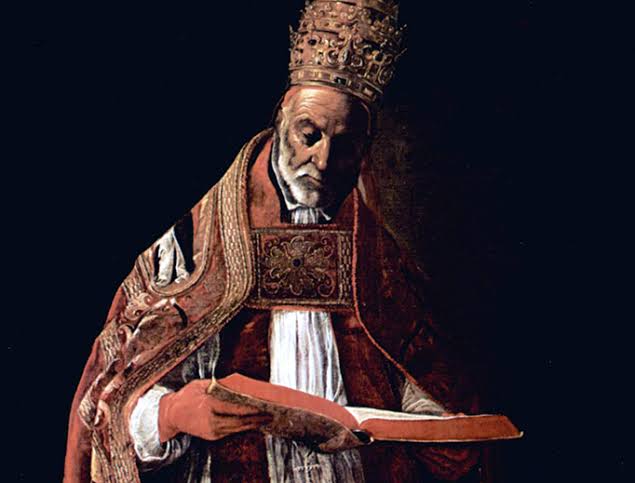
St. GREGORY the GREAT, Pope and Doctor.


Saint GREGORY the GREAT, son of Gordianus, a Roman regionarius, and Saint Silvia of Rome, nephew of Saint Emiliana and Saint Tarsilla, great-grandson of Pope Saint Felix III. Educated by the finest teachers in Rome, he served as prefect of Rome for a year, then he sold his possessions, turned his home into a Benedictine monastery, and used his money to build six monasteries in Sicily and one in Rome. Upon seeing English children being sold in the Roman Forum, he became a missionary to England.

He was elected 64th Pope by unanimous acclamation on 3 September 590, the first monk to be chosen. He sent Saint Augustine [of Canterbury] and a company of monks to evangelize England, as well as other missionaries to France, Spain, and Africa. He collected melodies and plainchant so associated with him that they are now known as Gregorian Chants. One of the four great Doctors of the Latin Church,  he wrote seminal works on the Mass and Divine Office, several of them dictated to his secretary, Saint Peter the Deacon.

(iBreviary)

Thursday, August 26, 2021

St. MONICA, the mother of St Augustine.


She was born in 332. After a childhood of singular innocence and piety, she was given in marriage to Patritius, a pagan. She at once devoted herself to his conversion, praying for him always, and winning his reverence and love by the holiness of her life and her affectionate forbearance. She was rewarded by seeing him baptized a year before his death. When her son Augustine went astray in faith and manners her prayers and tears were incessant. She was once very urgent with a learned bishop that he would talk to her son in order to bring him to a better mind, but he declined, despairing of success with one at once so able and so headstrong. However, on witnessing her prayers and tears, he told her to be of good courage; for it might not be that the child of those tears should perish. By going to Italy, Augustine could for a time free himself from his mother’s importunities; but he could not escape from her prayers, which encompassed him like the providence of God. She followed him to Italy, where he came under the influence of Saint Ambrose, and there by, his marvellous conversion, her sorrow was turned into joy. At Ostia, on their homeward journey, as Augustine and his mother sat at a window conversing of the life of the blessed, she turned to him and said, “Son, there is nothing now I care for in this life. What I shall now do or why I am here, I know not. The one reason I had for wishing to linger in this life a little longer was that I might see you a Catholic Christian before I died. This has God granted me superabundantly in seeing you reject earthly happiness to become His servant. What am I to do here?” A few days afterwards she had an attack of fever, and died in the year 387.


Monday, August 16, 2021

St. Joan of the cross


Born in 1666, in Anjou, France, Joan worked in the family business—a small shop near a religious shrine—from an early age. After her parents’ death she took over the shop. She quickly became known for her greediness and insensitivity to the beggars who often came seeking help.

That was until she was touched by the strange woman who claimed she was on intimate terms with the deity. Joan, who had always been devout, even scrupulous, became a new person. She began caring for needy children. Then the poor, elderly, and sick came to her. Over time, she closed the family business so she could devote herself fully to good works and penance.

She went on to found what came to be known as the Congregation of Saint Anne of Providence. It was then she took the religious name of Joan of the Cross. By the time of her death in 1736 she had founded 12 religious houses, hospices, and schools. Pope John Paul II canonized her in 1982.

Sunday, August 15, 2021

St. Stephen of Hungary, national hero and spiritual patron of Hungary and of bricklayers.


Born a pagan, he was baptized around the age of 10.

When he succeeded his father, Stephen adopted a policy of Christianization of the country for both political and religious reasons. 

and also requested that the pope confer the title of king upon him.

He abolished pagan customs with a certain amount of violence.

Reflection on the saint of the day


God’s gift of holiness is a Christlike love of God and humanity. Love must sometimes bear a stern countenance for the sake of ultimate good. Christ attacked hypocrites among the Pharisees, but died forgiving them. Paul excommunicated the incestuous man at Corinth “that his spirit may be saved.” Some Christians fought the Crusades with noble zeal, in spite of the unworthy motives of others.


Today, after senseless wars, and with a deeper understanding of the complex nature of human motives, we shrink from any use of violence—physical or “silent.” This wholesome development continues as people debate whether it is possible for a Christian to be an absolute pacifist or whether evil must sometimes be repelled by force.

-Franciscan Media

Thursday, August 12, 2021

St. Pontian, Pope and St. Hippolytus, Priest, martyrs. (Patron of Bibbiena, Italy; horses; prison guards; prison officers; prison workers)


PONTIAN was ordained bishop of Rome in 231. In 235 he was banished to Sardinia by the Emperor Maximinus, along with the priest HIPPOLYTUS. There he resigned from his office and later died. His body was buried in the cemetery of Saint Callistus, while the body of Hippolytus was buried in a cemetery along the Via Tiburtina. The Roman Church sanctioned devotion to both martyrs at the beginning of the fourth century.


Hippolytus, Martyr of Rome, with Concordia and other companions, he is a controversial figure who censured Pope St. Callistus I. Hippolytus was slain in Sardinia where he had been exiled for being elected as an antipope, the first in the history of the Church. He was reconciled to the Church before his martyrdom. His writings were important, including A Refutation of All Heresies, Song of Songs, and The Apostolic Tradition. 

Tuesday, August 3, 2021

SAINT JOHN VIANNEY, patron of priests, known as the “Curé of Ars”.


Saint John Mary Vianney, born during the days of the French Revolution, was ordained a priest in 1815. Three years later he was made parish priest of Ars, a remote French hamlet, where his reputation as a confessor and director of souls made him known throughout the Christian world. His life was one of extreme mortification.


Accustomed to the most severe austerities, beleaguered by swarms of penitents, and besieged by the devil, this great mystic manifested a imperturbable patience. He was a wonderworker loved by the crowds, but he retained a childlike simplicity, and he remains to this day the living image of the priest after the heart of Christ.

He heard confessions of people from all over the world for the sixteen hours each day. His life was filled with works of charity and love. It is recorded that even the staunchest of sinners were converted at his mere word. He died August 4, 1859, and was canonized May 31, 1925.


Tuesday, July 20, 2021

SAINT LAWRENCE OF BRINDISI, CAPUCHIN PRIEST AND DOCTOR


He was born in 1559. He entered the Capuchin Friars, taught theology to his fellow religious, and was chosen to fill positions of leadership in his Order. He became famous throughout Europe as an effective preacher. He wrote many works explaining the faith and died at Lisbon in 1619.

-ibrebviary

Thursday, October 15, 2020

SAINT HEDWIGE


 SAINT HEDWIGE, the wife of Henry, Duke of Silesia, and the mother of his six children, led a humble, austere, and most holy life amidst all the pomp of royal state.

- Devotion to the Blessed Sacrament was the keynote of her life.

- Her valued privilege was to supply the bread and wine for the Sacred Mysteries, and she would attend each morning as many Masses as were celebrated. 

-After the death of her husband she retired to the Cistercian convent of Trebnitz, where she lived under obedience to her daughter Gertrude, who was abbess of the monastery, growing day by day in holiness, till God called her to himself in 1242.

St. Margret Mary Alacoque


It is impossible to deny the message she heralded as revealed: that God loves us with a passionate love. She promoted the devotion to the Sacred Heart.

After considering marriage this lady entered the order of Visitation nuns at the age of 24. On Dec. 21 1674, she received the first revelation of the heart of Jesus as a symbol of love. After serving as novice mistress and assistant superior she died at the age of 43 saying 'I need nothing but God, and to lose myself in the heart of Jesus'

Monday, October 5, 2020

SAINT BRUNO, priest, founder of the Order of St. Bruno (Carthusians)


He was born at Cologne, about A.D. 1030, 

- With six companions he applied to Hugh, Bishop of Grenoble, who led them into a wild solitude called the Chartreuse. There they lived in poverty, self-denial, and silence, each apart in his own cell, meeting only for the worship of God, and employing themselves in copying books. 

He died in 1101.

Tuesday, September 22, 2020

St. Padre Pio of Pietrelcina, Capuchin Priest, stigmatist and incorruptible.


 St. Padre Pio of Pietrelcina, Capuchin Priest, stigmatist and incorruptible.


Born May 25, 1887 at Pietrelcina, Benevento, Italy to a southern Italian farm family as Francesco Forgione, the son of Grazio. He was a shepherd, and at age 15 he entered the novitiate of the Capuchin friars in Morcone, Italy, joining the order at age 19. He suffered several health problems, and at one point his family thought he had tuberculosis. He was ordained at age 22 on August 10, 1910.


While praying before a cross, he received the stigmata on September 20, 1918, the first priest ever to be so blessed. 

- He would hear confessions by the hour, reportedly able to read the consciences of those who held back. 

-Reportedly, he was able to bilocate, levitate, and heal by touch. 

-In 1956 he founded the House for the Relief of Suffering, a hospital that serves 60,000 a year. 

-In the 1920’s he started a series of prayer groups that continue today with over 400,000 members worldwide.

- He died September 23, 1968 in San Giovanni Rotondo, Foggia, Italy of natural causes.

Canonized by Pope Saint John Paul II on December 20, 2001. 

-Usually the testimony book during the course of canonization is have up to 3 books but St. Pio's was up to 16.

Saturday, September 19, 2020

St. FrancisMary of Camporoso, Capuchin Brother.


An Italian Roman Catholic professed religious from the Order of Friars Minor Capuchin. He became a beggar(questor) in Genoa where he sought alms from people and was known for his holiness which prompted people to come and see him.

Tuesday, September 15, 2020

Sts. Cornelius, pope Cyprian, bishop (martyrs)


For 14 months, there was no pope after the martyrdom of St. Fabian, the church was governed by a college of Priest. St. Cyprian, a friend of Cornelius wrote that Cornelius be elected pope. This he was for two years. With the sacrament of penance, he readmitted Christians who have denied Christ during the persecution.


These men were God's instrument in helping the church find prudent path between extremes of rigorism and laxity. They are part of the Church's ever-living streams of tradition, ensuring the continuance of what was begun by Christ, and evaluating new experiences through the wisdom and experience of  those who have gone before.

Feast of the conversion of St. Paul

 Feast of the conversion of St. Paul My turning point "I asked, ‘What shall I do, sir?"  (Acts 22:3-16) Beloved, there is a signif...